
Best Medical Aid in South Africa 2026: How to Choose
There is no single best medical aid, only the best one for you. How SA's schemes rate on customer experience, the plan types, and how to choose.
 By Hellopeter Editorial Team
Best Medical Aid in South Africa 2026: How to Choose
Search for the "best medical aid" and you'll find a dozen lists that all crown a different winner. The honest answer is that there's no single best medical aid. There's only the best one for your health needs, your budget, and the way you actually use healthcare. What this guide gives you instead is the two things those lists leave out: how the major schemes rate on real customer experience, and a clear way to choose the right one for you.
One thing up front. The scores below measure customer experience, how a scheme handles claims, communication and admin. They don't measure the quality of the clinical care, the cover itself, or value for money. A scheme can have strong cover and still frustrate its members. That distinction is the whole point of this guide.
There's no single "best" medical aid
A young, healthy single person and a family with a chronic condition need completely different cover. The "best" scheme for one is the wrong choice for the other. So rather than chase a winner, work two questions: which plan type fits your life, and which scheme will actually look after you when you claim.
The three plan types
Almost every medical aid decision starts with choosing one of three tiers:
- Hospital plan. Covers in-hospital costs and the regulated Prescribed Minimum Benefits, not day-to-day GP or dentist visits. The most affordable tier, and often the right choice for young, healthy people who mainly need protection against a big medical event. (We cover this tier in depth in our hospital plan guide.)
- Hospital plan with a savings account. Adds a yearly savings pot for day-to-day costs (GP, dentist, optometry). Good for families who want some everyday cover without paying for full comprehensive benefits.
- Comprehensive cover. Day-to-day benefits, savings, and above-threshold cover for heavy medical use. The most complete, and the most expensive, suited to older members or anyone managing significant ongoing healthcare.
Match the tier to your life first. Paying for comprehensive cover you never use is as costly a mistake as being underinsured when something serious happens.
What about cheaper "health insurance" options?
You'll also see cheaper products advertised as health cover, often at a fraction of a medical aid premium. These are insurance products, not medical aid. They typically pay a fixed amount towards day-to-day visits or a set cash sum per day in hospital, and they don't have to cover the Prescribed Minimum Benefits. They can suit someone who genuinely can't afford a registered scheme, but they aren't a substitute, they won't cover a large hospital bill the way a hospital plan does. If you can afford even an entry-level hospital plan from a registered scheme, that's almost always the stronger protection. Know which product you're buying before you commit.
How the major schemes rate on customer experience
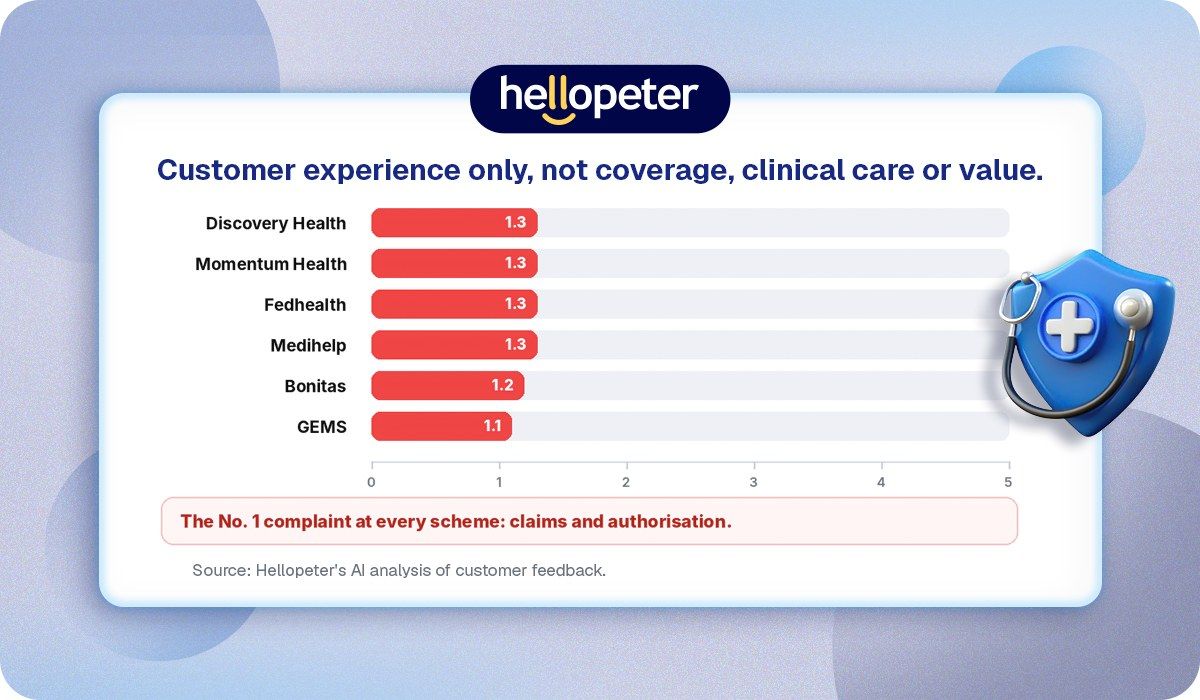
The table below ranks the major schemes on their Hellopeter customer-experience score. Read it for what it is: a measure of how members describe being treated, especially at claim time, not a verdict on the cover or the care. The striking thing is how little separates them, and how the same issue, claims and authorisation, drives the complaints almost everywhere.
| Scheme | HP experience score | Most-flagged issue |
|---|---|---|
| Discovery Health | 1.3/ 5 (Terrible) | Service and rejected claims |
| Momentum Health | 1.3/ 5 (Terrible) | Claims and authorisation |
| Fedhealth | 1.3/ 5 (Terrible) | Claims and authorisation |
| Medihelp | 1.3/ 5 (Terrible) | Rejected claims and co-payments |
| Bonitas | 1.2/ 5 (Terrible) | Claims and authorisation |
| GEMS | 1.1/ 5 (Terrible) | Claims and authorisation delays |
Source: Hellopeter's AI analysis of customer feedback (experience only, not coverage or value) — June 2026
Because the scores cluster, the brand name isn't the deciding factor. The deciding factors are fit (does the plan cover the hospitals, conditions and benefits you need) and how the scheme handles a claim when it counts.
So how do you actually choose?
Work through this, in order:
- Start with the plan type that matches your life and budget (above).
- Check the hospital network. Cheaper options restrict you to a network; going outside it can mean large co-payments. Confirm the hospitals near you're covered.
- Check the PMB and chronic list against your own conditions, and how the scheme handles chronic medication.
- Read the co-payments and waiting periods. Co-payments on scopes, scans and certain procedures are common; a three-month general waiting period, a twelve-month wait on pre-existing conditions, and a late-joiner penalty are all normal and regulated.
- Pressure-test claims and authorisation. Since this is where every major scheme draws the most complaints, ask exactly how pre-authorisation works, the common reasons claims get rejected, and how co-payments are communicated before treatment. A clear answer in writing tells you a lot.
- Get quotes through an accredited broker. Broker advice is free to you, and a good one will compare plans across schemes against your actual needs.
Don't forget gap cover
Whichever scheme you pick, a medical aid pays in-hospital costs at scheme rates, and private specialists often charge several times more. Gap cover is a separate, affordable product that bridges that shortfall, and for anyone using private hospitals it's close to essential. Our hospital plan guide explains how it works.
If a claim is wrongly rejected
If a claim or authorisation is unfairly declined, dispute it with the scheme in writing and ask for the specific rule they're relying on. If they won't resolve it, you can escalate to the Council for Medical Schemes (CMS), the regulator, which handles member complaints. Putting your experience on the public record on Hellopeter helps too. For the full approach, see our guide on how to complain effectively.
A Note on This Article
Hellopeter is independent and impartial. We aren't affiliated with the schemes mentioned, and nothing here's sponsored. Everything below is based on public, verified customer reviews on Hellopeter, which change as new reviews come in, so the figures reflect the picture at the time of publication. This is general information to help you compare, not financial advice, so do your own research before you decide.
Frequently asked questions
- Which Is the Best Medical Aid in South Africa?
- There's no single best. On customer experience, Hellopeter's data shows the major schemes score low and close together, so there's no clear winner to crown. The best scheme is the one whose plan type, hospital network and chronic cover fit your needs, and that handles claims well. Compare quotes through an accredited broker.
- How Much Does Medical Aid Cost?
- It varies enormously by plan type, your age, and how many dependants you cover, from a basic hospital plan to full comprehensive cover. This guide doesn't quote prices because they change and depend on your situation; get current quotes from the scheme or a broker.
- What Is the Difference Between a Hospital Plan and Full Medical Aid?
- A hospital plan covers in-hospital costs and PMBs only. Full medical aid adds day-to-day benefits like GP and dentist visits, at a higher premium. See our hospital plan guide for the detail.
- Do All Medical Aids Cover Prescribed Minimum Benefits?
- Yes. By law, every registered scheme option must cover the PMBs, a regulated set of conditions and emergencies, no matter how basic the plan.
- Can a Broker Help Me Choose?
- Yes. Accredited healthcare brokers give advice that's free to you and can compare plans across schemes against your needs. Make sure the broker is accredited and ask how they're paid.