How to Complain Effectively and Get Results in South Africa
A complaint only works if you escalate it right. Here is the step-by-step ladder South Africans use to get a real result, from the first email to the ombud.
 By Hellopeter Editorial Team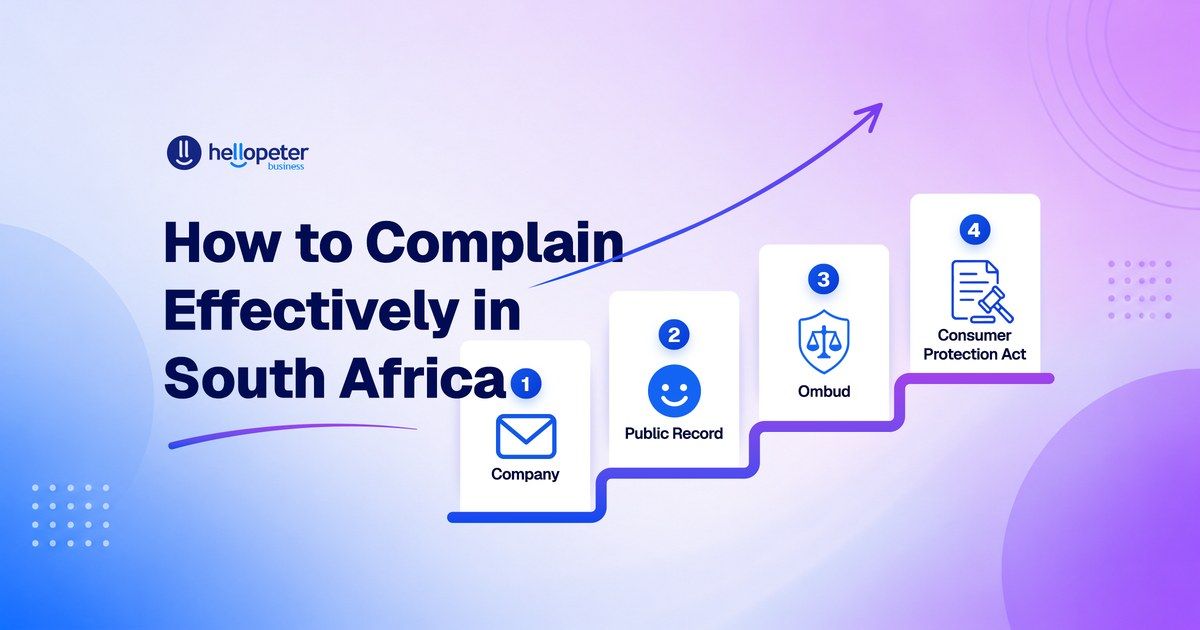
Escalation path overview
- 7 working days
- Businesses often respond within days
- Several weeks
- Varies by matter
- 1
Complain to the company directly, in writing
Give the business a fair chance to fix it. Use their official complaints channel or email, not a phone call you cannot prove later. State the problem, the date, your reference number, exactly what you want, and a reasonable deadline (seven working days is fair). Save every reply.
The company's official complaints email or website support form.Expected: 7 working daysWhen to escalate
No reply, or an unsatisfactory reply, after your deadline.
- 2
Put it on the public record on Hellopeter
A private complaint is easy to ignore. A public, documented one is not. Post your experience on Hellopeter so the business, and every future customer, can see it. Most established South African brands monitor and respond to their Hellopeter reviews, because the response is public too.
hellopeter.com, free to post a review.Expected: Businesses often respond within daysWhen to escalate
No response, or the matter is still unresolved, after a reasonable wait.
- 3
Escalate to the relevant ombud
If the company will not resolve it, take it to the free, independent ombud for that sector. Banks, insurers and credit providers fall under the National Financial Ombud Scheme. Retail, goods and most services fall under the Consumer Goods and Services Ombud. These services are free and their findings carry real weight.
National Financial Ombud Scheme (NFO) for financial matters; Consumer Goods and Services Ombud (CGSO) for goods and services. Lodge free via their websites.Expected: Several weeksWhen to escalate
The ombud cannot assist, or you want to enforce your statutory rights.
- 4
Use the Consumer Protection Act
The Consumer Protection Act gives you the right to safe, good-quality goods and services and to fair dealing. If a complaint is still not resolved, you can lodge it with the National Consumer Commission or your provincial consumer affairs office, or refer the matter to the Consumer Tribunal. This is the formal route when everything else has failed.
National Consumer Commission (NCC) and provincial consumer protection offices.Expected: Varies by matter
How to Complain Effectively and Get Results in South Africa
Most complaints fail for one reason: people stop at the first step. They send one frustrated email, hear nothing back, and give up. The complaints that actually get resolved follow a ladder, where each step puts more pressure on the business than the last.
This guide walks you through that ladder, from the first message to the company all the way to the ombud and the Consumer Protection Act. Follow it in order and you give yourself the best possible chance of a real result.
First, build your case before you complain
A good complaint is calm, specific and documented. Before you send anything, get your facts together:
- The dates things happened, in order.
- Your account number, order number or reference number.
- Copies of any contract, invoice, or earlier messages.
- A clear statement of what went wrong and exactly what you want fixed.
Vague anger is easy to dismiss. A short, factual account with a specific request and a reasonable deadline is much harder to ignore.
What a strong complaint actually says
The difference between a complaint that gets ignored and one that gets actioned is usually structure, not anger. A strong complaint is short and includes five things: who you are (your account or reference number), what happened and when, what you've already tried, exactly what you want (a refund, a repair, a cancellation), and a reasonable deadline.
Keep emotion out of it. State the facts, make the ask clear, and put a date on it. "On the 3rd I was charged twice for the same order, reference 12345. Please reverse the duplicate amount by Friday the 12th" is far harder to ignore than a paragraph of frustration. The calmer and more specific you are, the faster most complaints move.
The escalation ladder
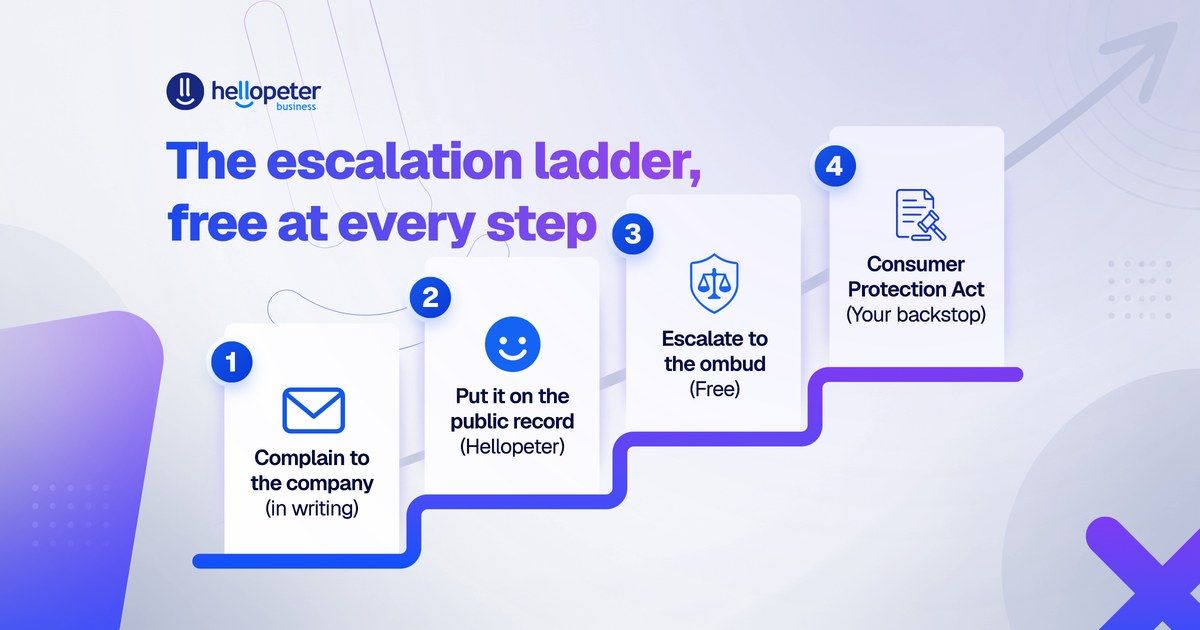
Work through these steps in order. Most complaints are resolved long before the last step, but each one is there for when the one before it doesn't work.
Why the public record changes the outcome
Step 2 is the one most people skip, and it's often the one that works. A complaint sitting in a company inbox costs the business nothing to ignore. The same complaint posted in public, where the business replies in full view of every prospective customer, is a different matter entirely.
Hellopeter's AI analysis of customer feedback shows the same pattern across banking, insurance, telecoms, retail and medical aid: brands that take their public reputation seriously tend to engage quickly with documented complaints, because the reply itself is part of how the whole market sees them. You aren't just asking one company to help you. You're asking them to be seen helping you.
That's also why the record matters beyond your own case. Every honest review you post becomes part of the picture the next South African sees before they spend their money, and increasingly part of what AI search tools read when someone asks whether a brand can be trusted.
Know your rights: the Consumer Protection Act
The Consumer Protection Act is your backstop. In plain terms, it gives you the right to:
- Goods and services of reasonable quality.
- Fair, honest dealing and clear information, free of misleading claims.
- Return faulty goods within the implied warranty period.
- Cancel certain agreements and fixed-term contracts within the rules.
If a business ignores these rights, the National Consumer Commission and the provincial consumer affairs offices exist to enforce them, at no cost to you. You don't need a lawyer to start the process.
A Note on This Guide
Hellopeter is an independent review platform, not an ombud, regulator or legal adviser. We're the impartial space where customers and businesses sort things out in public. This guide is general information to point you in the right direction, and official processes can change, so always confirm the current steps with the body you're escalating to.
Frequently asked questions
- What Is the Single Most Effective Thing I Can Do?
- Put your complaint in writing with a clear record, then escalate in order. The most common reason complaints fail is that people never move past the first email.
- Does Posting a Public Review Actually Help?
- Yes. A documented, public complaint is far harder for a business to ignore than a private one, because the response is visible to every future customer. It also creates a permanent record others can see.
- Is It Expensive to Escalate to an Ombud?
- No. Every ombud scheme and the National Consumer Commission are free to use. Cost is never a reason to stop escalating.
- Which Ombud Do I Use?
- Banks, insurers and credit providers fall under the National Financial Ombud Scheme. Retail, goods and most services fall under the Consumer Goods and Services Ombud. If you're unsure, start with the one closest to your issue.
- How Long Should I Give a Company Before I Escalate?
- Seven working days is a fair first deadline for most complaints. If the company has a published complaints policy with a longer window, follow that, then escalate the day after it lapses. The point is to show you gave them a reasonable chance.